Note: This is a paid announcement from Paddock Lake Area Lions Club — DH

Western Kenosha County's news source
Note: This is a paid announcement from Paddock Lake Area Lions Club — DH

The Bristol Village Board is scheduled to meet Monday, starting at 7 p.m. at Village Hall in Bristol.
Agenda items include:

The Wheatland Town Board is scheduled to meet Monday starting at 6 p.m. at Town Hall in New Munster.
Agenda items include:

Note: This is a paid announcement from H&R Block of Paddock Lake, Twin Lakes, Genoa City — DH
H&R Block is gearing up for the 2026 tax season, and we’re looking for friendly, dependable, and
customer-focused individuals to join our team! We are hiring for multiple seasonal positions at our offices in:
• Paddock Lake
• Twin Lakes
• Genoa City
• Front Desk I Customer Service / Receptionists
• Tax Professionals (experienced or entry-level)
This is a seasonal opportunity (October 2026 through April 2027), ideal for individuals looking to gain
experience in a professional office environment while helping clients during an important time of year.
Responsibilities include:
• Welcoming clients and providing excellent first impressions
• Answering phones and scheduling appointments
• Managing client check-in/check-out processes
• Assisting with administrative and office support tasks
• Maintaining organized records and workflow
We are also seeking Tax Professionals for the upcoming season:
• Experienced tax preparers are encouraged to apply
• No experience? No problem!
H&R Block offers an Income Tax Course (ITC) for individuals interested in starting a career in tax preparation.
ITC Course Details:
Enrollment opens August 2026
• Learn the fundamentals of tax preparation
• Build valuable, in-demand skills
• Opportunity for employment upon completion
Candidates may qualify by:
• Successful completion of the ITC and passing the knowledge assessment
• Strong communication and customer service skills
• Basic computer proficiency
• Organizational skills and attention to detail
• Positive attitude and reliability
• Ability to work in a fast-paced, team-oriented environment
• Flexible scheduling options
• Supportive team environment
• Valuable training and career-building opportunities
• Seasonal roles with potential for future growth
Positions are limited and fill quickly—apply early!
Apply in person at your local H&R Block office.
Human Resources Contact:
Kameo lanson
Phone: 262-843-3557
Email: kameo.ianson@hrblock.com
Start your journey with H&R Block—whether you’re greeting clients or preparing returns, you can make a difference this tax season!

The Randall Consolidated School Board is scheduled to hold a special meeting Monday starting at 5:30 p.m. in the school’s front office conference room.
Agenda items include:

Note: The following is a paid announcement from Kenosha County Aging and Disability Resource Center,– DH
The Kenosha County Caregiver Coalition, together with the Aging and Disability Resource Center, is hosting the 5th annual appreciation luncheon for family caregivers. Caregivers who are Kenosha County residents and are caring
for an adult are invited to attend. This year’s them is Music Makes the Mood.
Family caregivers are often hidden behind the scenes. They are the spouses, parents, children, and neighbors who become the individuals navigating care and finding resources and supports for the person they are caring for. The luncheon aims to provide appreciation, relaxation, resources, and information to these caregivers.
The luncheon will be held Wednesday, Nov. 18. Speaker, Heidi Wojtak, music therapist, will present, How to Make the Most of the Power of Music, which focuses on understanding and experiencing the therapeutic effect of music and music therapy and how both can be used to enhance our health and wellness.
There is no cost for this event. Respite and lunch for the person you are caring for is available at no charge and must be
requested at time of registration. Reservations are required and must be received by Monday, November 2. Family
caregivers residing in Kenosha County may call the ADRC at 262-605-6646 for location information and to register.
Gathering Waters: Wisconsin’s Alliance for Land Trusts presented Seno K/RLT Conservancy with the 2026 Land Trust Volunteer of the Year Award for former Board President Mark Lesko on Oct. 10, 2026 in Burlington.
The award was presented in memoriam after Mark’s passing earlier in 2026.
Mark had been a cornerstone of land conservation in southeast Wisconsin since the late 1990s, when he began volunteering at what would eventually become Seno K/RLT Conservancy in Burlington. Over the course of nearly three decades, he grew from a hands-on volunteer — planting trees, managing woodland habitat, controlling invasive species, and helping remodel the barn that became Seno’s learning center — to the Board President, a role he filled with the same dedication that defined his early years.
“Mark Lesko was an exemplary role model, not only for volunteering in general, but for conservation specifically,” said Paul Sloth, Seno K/RLT Conservancy’s Executive Director. “Mark’s impact on our corner of southeast Wisconsin is immeasurable, and we were fortunate to have had someone like him to guide the next generation of conservation volunteers.”
Mark served as the de facto forest manager for Seno’s 127-acre Woodland Center property and the 84-acre Drumlin farm, coordinated habitat restoration volunteers, led annual tree plantings and prescribed burns, and expanded the organization’s beloved maple sugaring educational program.
What truly set Mark apart was his ability to motivate others. He grew Seno K/RLT’s board, inspired the next generation of conservation volunteers, and helped close landmark conservation easements — including a 242-acre project with the Erickson family and a 60-acre easement with the Riley family — that enhance southeast Wisconsin’s landscape.
Mark was the steady force behind much of what the organization has achieved. His guiding adage, “when we know better, we do better,” has shaped Seno’s culture of continuous improvement and created synergy amongst numerous Seno K/RLT volunteers, from board members to buckthorn killers.
“Mark embodied the spirit of land stewardship — humble, tireless, and rooted in a genuine love for the land, and is greatly missed by those who knew him,” said Mike Carlson, Executive Director at Gathering Waters. “He leaves a lasting legacy on land conservation in southeastern Wisconsin.”
About the Land Conservation Leadership Awards: The Land Conservation Leadership Awards recognize the outstanding achievements and contributions of individuals and organizations that devote their time and talents to protecting Wisconsin’s land, water, and wildlife. The awards are presented annually by Gathering Waters to conservation leaders.

At 6:32 p.m., Bristol Fire and Rescue units and sheriff’s deputies are responding to a crash at Highways 45 and V in Bristol.
Per dispatch: A motorcyclist has fallen.
UPDATE 6:39 p.m. — Per radio transmissions: Motorcyclist left the original scene but has been stopped again at Highway 45 and CJ.
A dense fog advisory has been issued for an area of Wisconsin including Kenosha County.
The advisory is set to be in effect until 10 a.m.
Visibility maybe a quarter of a mile or less in dense fog.
Other Wisconsin counties in the watch area are: Fond du Lac, Sheboygan, Dodge and Walworth counties.
We are doing some required site maintenance. While that is underway, westofthei.com may be down or not work properly. We apologize for any inconvenience.
Any breaking news will be posted at our Facebook page.
Thank for your patience.
UPDATE — Maintenance completed for now.

Note: The following is a paid announcement from the village of Paddock Lake– DH
VILLAGE OF PADDOCK LAKE
DEPARTMENT OF PUBLIC WORKS
Streets and Utility Laborer
The Village of Paddock Lake Department of Public Works has an opening for an entry-level full-time operator/labor in the streets and roads division. The primary focus will be street maintenance, snow/ice removal, stormwater infrastructure maintenance, forestry, Parks, and facility maintenance. The position may also be directed to assist with activities within the Water and Sanitary Sewer Utility.
Qualifications: Requires a high school diploma or GED and be at least 18 years of age. Candidate shall possess a valid Wisconsin Driver’s License and have the ability to obtain a Village sponsored Commercial Driver’s License with an endorsement of air brakes within 12 months of employment start date. First aid and CPR certified or willingness to become certified within (1) year. Be able to keep basic records, document information, write legibly and have good communication skills.
Preferred: Experience with basic mechanical equipment operation and troubleshooting, construction principles, and desire to work in customer service. Should be comfortable with operation of heavy and light equipment and use of small hand and power tools.
Compensation: Hourly wage, with excellent benefit package per Village Personnel Manual. Pay will depend on qualifications and probationary period, hourly pay range $18.91 to $20.01.
Conditions of Employment: Work is primarily outside field work that may require entry into confined spaces such as maintenance access holes. At times exposure to inclement weather, fumes, odors and dust that will require use of personal protective equipment. Candidate must be able to do medium to heavy lifting, work involving climbing, balancing, stooping, kneeling, crouching, reaching, and walking moderate distances around various sites as well as bending and twisting as necessary. Selected candidate must pass a fit for physical, alcohol/drug screening and criminal background check prior to first day of employment.
Applications: Candidates should apply by submitting a cover letter, resume and contact information for (3) work related references along with a fully completed Village of Paddock Lake Employment Application to the Village Administrator, by delivering completed application and resume to Village Hall at 6969-236th Ave, Paddock Lake. Employment applications and job description can be obtained at the Village Hall, 6969-236th Avenue, Paddock Lake, Wi. 53168.
Application Deadline: Open until filled
The Village of Paddock Lake is an Equal Opportunity Employer. In compliance with American Disabilities Act, the Village will provide reasonable accommodations to qualified individuals with disabilities.
Voters in the Trevor-Wilmot Consolidated Grade School District will be able to vote on a operating referendum in the Nov. 3 election.
We sent a questionnaire to district officials. Following are the responses from Tracy Donich, district administrator.
Continue reading →
The Westosha Central High School District board is schedule to hold a special board meeting Thursday, starting at 5 p.m. in the school’s upper commons.
Agenda items include:

There will be a brand-new Halloween event in Twin Lakes this year.
Dena Prestininzi and Laura Kaskin have organized the Twin Lakes 1st Annual Community Halloween Light Parade on Friday, Oct. 30 at 7 p.m.
The parade route begins at Ace Hardware and ends at Lance Park.
The parade is free for all attendees.
Organizers say over 25 lit up parade units and are expected, along with candy distribution, glow sticks and special live entertainment.
Participation in the parade is free and open to both families and local businesses. Those interested in entering a float or walking entry in the parade can sign up by emailing dena@atproperties.com.
The Twin Lakes 1st Annual Community Halloween Light Parade is sponsored by Dena Prestininzi (@properties).
Note: The following is a paid announcement from the Trevor-Wilmot Consolidated Grade School District — DH


From Kenosha County:
Kenosha County will participate in National Drug Take Back Day collection events at five locations throughout the county on Saturday, October 24, County Executive Samantha Kerkman announced.
The events will be held from 10 a.m. to 2 p.m. at these sites:
— Walmart, 3500 Brumback Blvd., Somers
— New Kenosha County Human Services Building, 3500 52nd St., Kenosha
— The Kenosha County Center at Highways 45 and 50 in Bristol (at the cold storage building behind the main building; look for the sign on Highway 50 on the southeast side of the building)
— Twin Lakes Police Department, 920 Lance Drive, Twin Lakes
— University of Wisconsin-Parkside, Tallent Hall, 900 Wood Road, Kenosha
National Drug Take Back Day provides a safe, convenient, and responsible means of disposing of prescription and over-the-counter drugs at no cost, while also educating the public about the potential for abuse of medications, Kerkman said. In addition to dropping off unused and expired medications, visitors may also receive naloxone training and save a life.
Naloxone (NARCAN®) is the medication that reverses an opioid overdose. In five minutes or less, trainees will learn the signs of an overdose and how to quickly administer this life-saving medication. More information about the naloxone distribution program in Kenosha County is available at https://tinyurl.com/NaloxoneTrained.
Naloxone training, test strips for fentanyl and xylazine, gun locks, and information about Kenosha County Behavioral Health Services resources will be available at all of the locations except for the Twin Lakes Police Department and UW-Parkside.
“This is a free, convenient opportunity for Kenosha County residents to make their homes safer by safely disposing of unneeded medications,” Kerkman said. “I encourage people to visit one of the sites, and to learn more about the other behavioral health resources that will be available.”
Walmart is a first-time participant in the county’s twice-yearly Drug Take Back Day events. “Walmart is proud to partner with Kenosha County Behavioral Health Services and local law enforcement to make safe medication disposal more accessible for our neighbors,” said Mark Cagadas, PharmD, Market Health & Wellness Director. “Hosting Drug Take Back Day gives community members a convenient way to dispose of unneeded medications while helping protect
our community and environment.”Items acceptable for collection at the local events include prescription (controlled and noncontrolled) and over-the-counter medications, ointments, patches, inhalers, non-aerosol spray dispensers, creams, vials, and pet medications.
Unacceptable items include illegal drugs, needles/sharps, acids, aerosol cans, biohazardous materials (anything containing a bodily fluid or blood), personal care products (shampoo, soaps, lotions, sunscreens), household hazardous waste (paint, pesticides, oil, gas), and mercury thermometers.The Kenosha County Division of Behavioral Health Services is partnering with the Kenosha County Sheriff’s Office, and the Kenosha, Twin Lakes and UW-Parkside police departments for this important community event. Additionally, Somers Fire & Rescue will have one of its rigs for the public to view at the Walmart site.
Wisconsin has ranked number one in the nation for the amount of prescription medications collected at Drug Take Back Day events for the past five years. The Wisconsin Department of Justice reported a total of 56,818 pounds of unused medications were collected at the spring 2026 event.
This post sponsored by Westosha Floral.
The following deaths of local residents and those with local connections are being reported by funeral homes today. Click on name to see obituary/service information:
Continue reading →At about 6:35 p.m., Wheatland Vol. Fire Department, Town of Randall Fire Department and Twin Lakes Rescue units and sheriff’s deputies are responding to a rep[ort of a crash in the 32600 block of Highway JI in Lilly Lake.
UPDATE about 6:37 p.m. — Unit arriving on scene reports two vehicles showing moderate damage.
UPDATE 6:46 p.m. — Wheatland command requests landing zone for medical transport helicopter to be set up by Randall FD
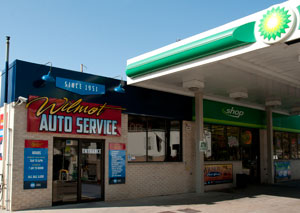
Note: Wilmot Auto Service is a westofthei.com sponsor. This is a paid announcement. — DH
Wilmot Auto Service, Inc is an independent auto repair shop and has earned the Blue Seal of Excellence Recognition as prescribed by the National Institute for Automotive Service Excellence, (ASE), a non-profit organization dedicated to improving the quality of vehicle repair and service by means of voluntary testing and certification for automotive repair and service professionals.
Call 862-6300 for an appointment. Hours are Monday through Friday 7:30 a.m. to 5 p.m.
Wilmot Auto Service is open during the Highway W construction.
Dwayne & Cindy Garwood are the owners and Dwayne is an ASE Master technician and has been in the automotive repair business for over 38 years. Dwayne’s grandpa Harmon Garwood started Wilmot Auto Service in 1951. They are celebrating 75 years in business. He employs ASE certified and ASE master technicians. Dwayne’s commitment to you has always been to offer the highest quality, honest and friendly auto service.
Wilmot Auto Service offers a variety of services like alignments, brakes, tires, timing belts, check engine lights and state inspections. They can be reached at 262-862-6300. They are located at 11307 Fox River Rd. Wilmot, WI 53192 with the BP gas station in downtown Wilmot. www.wilmotautoservice.com

The National Weather Service has issued a dense fog advisory for an area of Wisconsin that includes Kenosha County.
The advisory is set to continue until 9 a.m.
Visibility may be less than a quarter of a mile in dense fog areas. “Low visibility could make driving conditions hazardous,” the advisory text says.
Other counties included in the advisory are: .Racine, Milwaukee, Waukesha, Fond du Lac, Sheboygan, Ozaukee and Washington.
The latest, local NWS forecast calls for a high temperature in the 60s and a low in the 40s, which is essentially the same forecast for each day through Sunday.
This post sponsored by Westosha Floral.
The following deaths of local residents and those with local connections are being reported by funeral homes today. Click on name to see obituary/service information:
Continue reading →
The Twin Lakes Village Board is scheduled to meet Monday, starting at 6:30 p.m. at Village Hall.
Agenda items include:
From the Office of the Kenosha County Clerk:
In-person absentee voting for the Nov. 3 general election begins Tuesday, Oct. 20, continuing through Friday, Oct. 30, at municipal clerks’ offices across Kenosha County.
Voters may cast ballots in the city, village or town clerk’s office in the municipality where they reside. Hours and locations are posted below.
“In-person absentee voting provides a convenient opportunity for people to cast their ballots early, avoiding possible lines on Election Day,” said Kenosha County Clerk Regi Waligora. “Be sure to bring your photo ID. Our municipal clerks work hard to make this experience efficient and secure.”
Those who are not registered to vote at their current address may do so at their municipal clerk’s office before casting an in-person absentee ballot. The last day to register to vote at your municipal clerk’s office is Friday, Oct. 30. After this date, you may register to vote at your polling place on Election Day.
If you have moved or changed your name, you will have to re-register to vote. Contact your municipal clerk regarding requirements and documents necessary for registration.
Eligible voters include any U.S. citizen who will be 18 years of age or older on Election Day and has resided at their current address for at least 28 consecutive days before Election Day.
Voters who wish to receive an absentee ballot by mail have until Thursday, Oct. 29, to request one, although Waligora encourages people to submit these requests sooner rather than later to avoid mail delays.
USPS and the Wisconsin Elections Commission recommend absentee ballots be mailed back to your municipal clerk by Oct. 24 or earlier to ensure they arrive on time. To ensure your absentee ballot is received in a timely manner, you may drop it off during their normal business hours.
At about 9:30 a.m., Bristol Fire and Rescue, Salem Lakes Fire/Rescue, Paris Fire and Rescue, Pleasant Prairie Fire and Rescue, Antioch Fire and Rescue units and sheriff’s deputies are responding to a report of a fire in the 7700 block of 241st Street in Paddock Lake.
Per dispatch: Smoke reported coming from a garage.
UPDATE 9:37 a.m. — Incident command reports this is a small fire that can be handled by Bristol units alone. Mutual aid departments released from responding.
UPDATE 9:51 a.m. — Command reports to dispatch that the fire is extinguished.
UPDATE 10:02 a.m. — Command requests response from Kenosha County Fire Investigation Task Force.

From the village of Paddock Lake:
Paddock Lake and Wanasek Company will be beginning an emergency stormwater system repair project in October and will be completing the emergency stormwater system repairs with site restoration by November 13, 2026.
The purpose of this emergency stormwater system repair project is the result of a section of system pipe separating from an outfall head wall. Also included in the project is the removal of decades of sediment and debris that has collected at the system outfall.
The Village has received from the Wisconsin Department of Natural Resources an emergency approval for the work within the wetland located behind the Village Public Works Departments facility at 23201-62nd Street.
Project Scope: The project scope includes the following Wis. DNR approved activities:
— Removal of stormwater system outfall apron end wall.
— Removal of 24 linear feet of 36-inch failed reinforced concrete system piping at out fall.
— Removal of decades of sediment and debris within the wetland drainage channel.
— Installing approximately 275 Square feet of heavy Riprap at improved stormwater system out fall to separate future sediment and debris from stormwater.
— Restoration of disturbed sites includes the planting of vegetation.Any residents having questions or concerns, please do not hesitate to contact the Village Administrator at 262-843-3617 or Sonya Ponzi of the Wisconsin DNR at Sonya.Ponzi@wisconsin.gov

Plan to spend some time in what’s left of your vegetable garden Friday.
The National Weather Service has issued a frost advisory. The advisory is set to be in effect from 1 to 9 a.m., Saturday.
The temperature is forecast to dip to 30 degrees overnight Friday. So maybe after harvesting those tomatoes you might want to turn on the heat inside.
The frost advisory is in effect for Kenosha, Milwaukee, Ozaukee and Racine counties. Much of the rest of Wisconsin has a freeze warning, except, interestingly enough, the most northern reaches.
There’s actually a warm-up in the forecast too. After a couple of days with highs in the 50s, temperatures will start to climb Sunday with high in the 60s through Tuesday and perhaps in the 70s after that.
Note: The following is a paid announcement — DH

Kenosha County voters have a contested election on the fall election ballot for clerk of circuit court.
On the ballot will be:
Incumbent Rebecca Matoska-Mentink did not run for re-election.
The same questionnaire was submitted by westofthei.com to each candidate by email. Here are the candidates’ biographical information followed by their question responses, presented in alphabetical order:
Continue reading →Thursday and Friday could be wet ahead of a frosty Friday night, says the latest, local National Weather Service forecast.
Rain is most likely Thursday after noon until about 8 p.m. Patchy fog also may be present. Thursday’s precipitation could total about half an inch.
Friday’s rain also is most likely in an afternoon range from about 11 a.m. to 3 p.m., with a total of .04 inches. Wind will be more significant Friday with a northwest wind of 15 to 20 mph and gusts as high as 35 mph.
High temperatures should be in the mid to upper 50s through Saturday. Friday night/early Saturday morning could see widespread frost, with a low temp at 32.
High temperatures are expected to climb back into the 60s starting Sunday.
Note: The following is a paid announcement from Froedtert South — DH

 News from Kenosha Lens